Is Lightspeed POS Too Expensive? A Lower Cost Alternative for 2026

If Lightspeed POS feels too expensive, you are not alone. Search any retail forum and you will find owners asking the same thing: the software looked reasonable at signup, then tier upgrades, add-ons, and payment processing pushed the real monthly bill much higher. This guide breaks down what actually drives Lightspeed's cost, compares five POS systems on total cost of ownership, and shows where a lower cost option like PHP Point of Sale fits.
Why does Lightspeed POS feel too expensive?
Lightspeed usually feels expensive because the sticker price is only part of the story. The entry plan covers the basics, but advanced inventory, extra registers, analytics, and integrations often require higher tiers or paid add-ons. Layer in payment processing fees and per location charges, and the monthly total climbs well past the number you first signed up for.
For a store comparing options, the headline plan price matters less than the fully loaded monthly cost. Lightspeed publishes its own pricing and cost guidance, and third-party breakdowns like the KORONA POS Lightspeed pricing analysis show how tiers and processing add up in practice. Lightspeed's own POS cost guide is also worth reading for context.
What is the most affordable Lightspeed alternative?
 For most independent and multi-store retailers, PHP Point of Sale is the most affordable Lightspeed alternative on a total-cost basis. Cloud plans start at $54.00 per month per location billed annually, or $59.00 per month billed monthly, with a Pro tier at $79.00 to $84.00. Pricing stays predictable because core retail features are included rather than gated behind premium tiers. Prices shown are for the United States; see the pricing page for your country.
PHP Point of Sale earns the top pick here for three reasons. It keeps monthly software cost low and transparent, it handles multi-location inventory without forcing you into the most expensive tier, and it makes switching from another system straightforward. You can see full plan details on the PHP Point of Sale pricing page and review core capabilities on the features page.
Lightspeed vs the top alternatives: how do the costs compare?
On a total-cost basis the ranking is clear: lower, predictable software fees beat feature-gated tiers for most small and mid-size retailers. PHP Point of Sale leads on value, Square wins for very low volume sellers who can absorb processing fees, and Clover, Shopify POS, and Lightspeed sit higher once you add hardware, add-ons, or higher tiers. Choose based on your fully loaded monthly cost, not the entry price.
Here is a fair, five-option comparison. Competitor figures below are third-party published starting prices and change over time, so confirm them on each vendor's site before deciding.
| POS system | Software starting price | Best for |
|---|---|---|
| 1. PHP Point of Sale | $54.00/mo annual ($59.00 monthly); Pro $79.00 to $84.00 | Retailers wanting low, predictable pricing and multi-store inventory |
| 2. Square POS | Free base plan, pay per transaction (third-party) | Very low volume or pop-up sellers |
| 3. Clover | Monthly software plus required hardware, commonly from about $60/mo (third-party) | Merchants who want an all-in-one hardware bundle |
| 4. Shopify POS | Pro add-on about $89/mo on top of a Shopify plan (third-party) | Ecommerce-first brands already on Shopify |
| 5. Lightspeed Retail | Plans commonly start around $89/mo billed annually and rise for higher tiers (third-party) | Larger operations that need Lightspeed's advanced modules |
The takeaway is not that Lightspeed is a bad product. It is that many retailers pay for capability they do not use. If your store needs solid inventory, reporting, and reliable checkout without premium-tier pricing, a lower cost alternative covers the same day-to-day work. For a like-for-like view, see the PHP Point of Sale vs Lightspeed comparison, and for other matchups the vs Square and vs Clover pages.
How much can you save by switching from Lightspeed?
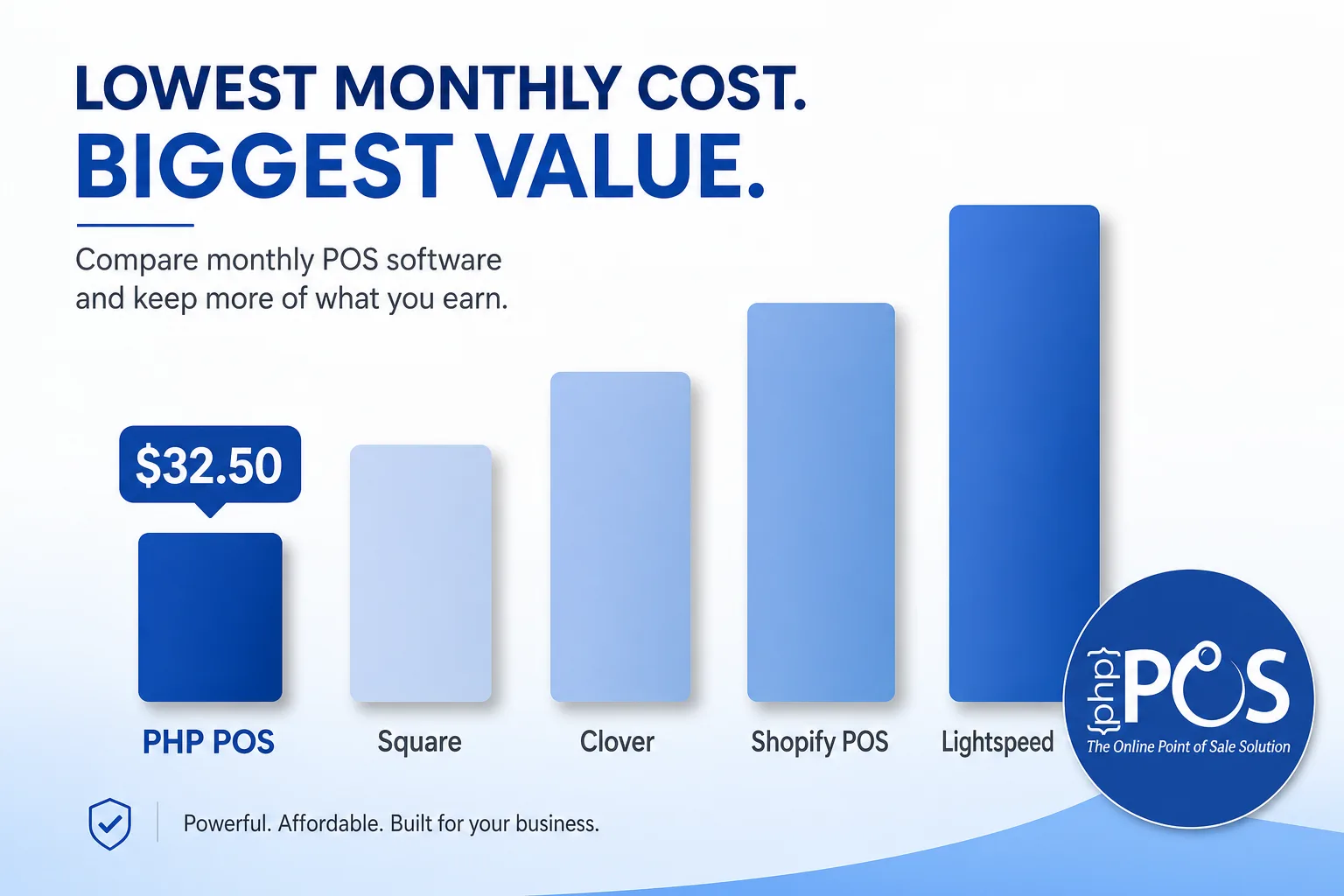 Savings come from two places: a lower monthly software fee and fewer paid add-ons for features that are already included. Moving from a higher Lightspeed tier to a plan starting at $54.00 per month can cut software cost meaningfully each month, and the gap widens across multiple locations. Your exact number depends on tier, locations, and processing volume.
To estimate your own figure, run your current tier, add-ons, and location count through the POS cost calculator, then pressure-test the switch with the break-even calculator. Comparing your real Lightspeed invoice against a predictable plan is the fastest way to see whether switching pays off, and over a year the difference is usually easy to justify.
Is a cheaper POS worth switching to?
A cheaper POS is worth it when it keeps the features you rely on daily and removes the ones inflating your bill. The risk in switching is not price, it is data migration and staff retraining. A good alternative reduces both by importing your products, customers, and inventory cleanly and by keeping the checkout flow familiar so your team is productive on day one.
PHP Point of Sale supports that kind of move with product and customer imports, multi-location inventory, and integrations such as Shopify sync for retailers who also sell online. If you want to test it against your own catalog before committing, start a free trial and load a sample of your data.
Frequently asked questions
Is Lightspeed POS actually expensive, or does it just feel that way? It depends on your tier and add-ons. The entry plan can look competitive, but advanced inventory, extra registers, analytics, and payment processing raise the fully loaded monthly cost. Many retailers find the real bill is higher than the advertised starting price once everything they use is switched on.
What is the cheapest Lightspeed alternative for a small retailer? For predictable monthly cost, PHP Point of Sale starts at $54.00 per month billed annually, or $59.00 per month billed monthly, with core retail features included. Square can be cheaper at very low volume because its base plan is free, but its per-transaction processing fees add up as sales grow.
Will I lose my data if I switch away from Lightspeed? No. You can export products, customers, and inventory from Lightspeed and import them into a new POS. Plan the migration during a slower period, verify counts after import, and keep your old system read-only for a short overlap so nothing is lost.
Does a lower cost POS still handle multi-store inventory? Yes. PHP Point of Sale includes multi-location inventory without forcing you onto the most expensive tier, which is a common reason retailers move off higher Lightspeed plans. Confirm the exact plan that fits your store count on the pricing page.
How do I calculate my real savings before switching? Add up your current software tier, every paid add-on, and per location fees, then compare that to a flat plan starting at $54.00 per month. Use the POS cost calculator to model it, and the break-even calculator to see how quickly the switch pays for itself.
The bottom line
If Lightspeed POS feels too expensive, the fix is usually not a downgrade in capability. It is a POS with predictable pricing that includes the features you actually use. PHP Point of Sale starts at $54.00 per month billed annually, handles multi-store inventory, and imports your existing data, which makes it a low-risk way to cut your monthly bill without disrupting the checkout your team already knows.